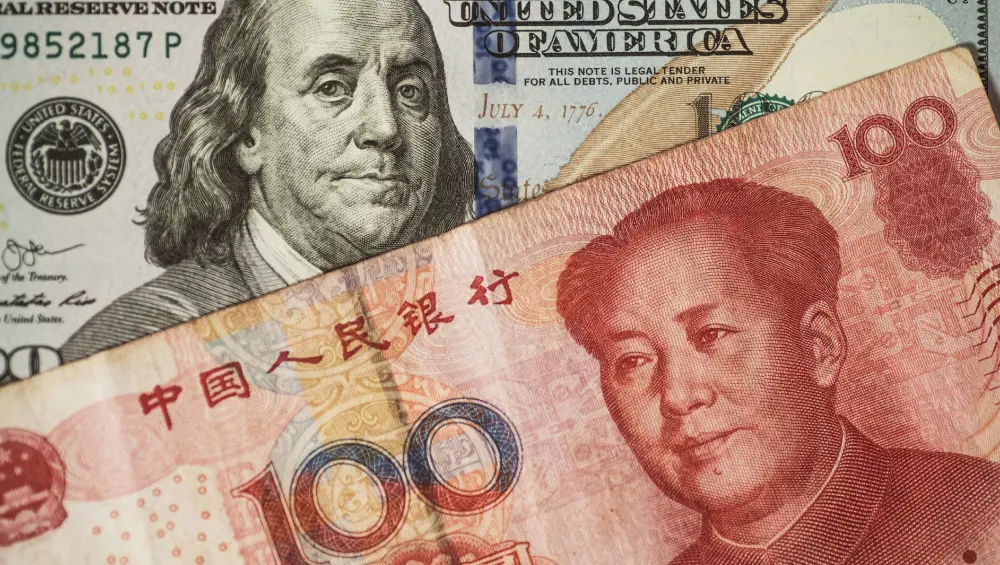
The USD/CNH currency pair represents the exchange rate between the US Dollar (USD) and the offshore Chinese yuan (CNH). It shows how many Chinese yuan are required to purchase one US dollar.
USD/CNH is one of the most important currency pairs for traders seeking exposure to China’s currency movements outside mainland China. As China’s economy continues to play a central role in global trade, the USD/CNH pair has become increasingly relevant for institutional investors, hedge funds, and derivatives traders worldwide.
What is CNH? Offshore Chinese Yuan Explained
| Currency Code | Market | Description |
|---|---|---|
| CNY | Onshore China | Chinese yuan traded within mainland China under tighter regulation |
| CNH | Offshore | Chinese yuan traded outside mainland China in global financial centers |
The CNH market was created to allow the Chinese currency to trade freely outside mainland China, mainly in financial hubs such as Hong Kong, Singapore, and London.
Unlike CNY, which operates within China’s managed exchange rate system, CNH is largely determined by global market supply and demand, making it more flexible and attractive for international traders.
What Does USD CNH Represent?
In the USD/CNH pair:
- Base currency: US Dollar (USD)
- Quote currency: Offshore Chinese Yuan (CNH)
If USD/CNH trades at 7.00, it means 1 USD = 7 CNH.
Movements in the pair reflect changes in:
- China’s economic outlook
- US monetary policy
- Global trade flows
- Capital flows between China and international markets
Because CNH is more market-driven than CNY, the pair often experiences higher volatility, making it attractive for speculative trading and hedging.
Why the USD CNH forex pair Matters
USD/CNH has become a key instrument in global financial markets for several reasons.
1. Exposure to China’s Economy
China is the world’s second-largest economy and a major global trading partner. The yuan’s movements often reflect shifts in Chinese growth, trade balances, and capital flows.
2. Offshore RMB Internationalisation
The development of the CNH market is part of China’s broader strategy to internationalise the renminbi (RMB).
3. Hedging Trade and Investment
Corporations trading with China frequently use USD/CNH to hedge currency risk.
4. Macro Trading Opportunities
Macro hedge funds often trade USD/CNH as a proxy for:
- Chinese economic policy
- Asian currency trends
- Global risk sentiment
Key Exchanges Offering USD CNH Products
While USD/CNH trades widely in the over-the-counter (OTC) forex market, several major derivatives exchanges offer futures and related products.
| Exchange | Product | Details |
|---|---|---|
| CME Group | CNH FX Futures | One of the global benchmark offshore RMB futures contracts, widely used by institutional investors |
| Hong Kong Exchanges and Clearing (HKEX) | USD/CNH Futures | Deliverable RMB futures introduced in 2012 to support offshore RMB trading |
| Singapore Exchange (SGX) | CNH FX Futures | Provides access to offshore RMB futures during Asian trading hours |
| Eurex | CNH FX derivatives | European venue offering RMB currency derivatives |
| APEX Exchange | USD/CNH Perpetual Futures | Perpetual futures contract with no expiry, allowing traders to speculate on USD/CNH price movements |
For example, HKEX launched USD/CNH futures in 2012, the first deliverable RMB currency futures quoted and settled in renminbi.
These exchange-traded products allow market participants to hedge or speculate on yuan movements with transparent pricing and central clearing.
USD/CNH vs USD/CNY: Key Differences
| Feature | USD/CNH | USD/CNY |
|---|---|---|
| Market | Offshore | Onshore China |
| Exchange rate control | Market driven | Managed by Chinese authorities |
| Liquidity hubs | Hong Kong, Singapore, London | Mainland China |
| Accessibility | Global investors | Restricted access |
Although both represent the Chinese yuan, USD/CNH typically reflects global market sentiment, while USD/CNY may move within a tighter policy band.
Factors That Influence USD CNH
Several macroeconomic and policy factors can move the USD/CNH exchange rate.
Chinese Monetary Policy
Actions by the People’s Bank of China (PBOC) can influence both the onshore and offshore yuan.
US Federal Reserve Policy
Interest rate changes affect the relative attractiveness of holding USD versus CNH.
Trade Balances
China’s exports and imports can impact demand for yuan.
Capital Controls
China’s capital flow policies can create divergence between CNY and CNH exchange rates.
How Traders Trade USD CNH
Professional traders typically access the pair through several instruments:
- Spot Forex
Direct currency trading through banks and forex brokers. - Futures Contracts
Exchange-traded USD/CNH futures available on major derivatives exchanges. - Options on CNH Futures
Used for volatility trading or hedging. - Non-Deliverable Forwards (NDFs)
Popular among institutional investors to hedge RMB exposure.
For traders looking to act on these factors, our guide on USD/CNH futures trading tips covers how to monitor interest rate differentials, geopolitical risk, and Chinese economic data releases in practice.
Why USD CNH Is Important for Asian Markets
USD/CNH is particularly relevant in Asian financial centres such as Singapore and Hong Kong, where the offshore RMB ecosystem is well developed.
For traders in Singapore, the pair serves as a key instrument for:
- Hedging China-related investment exposure
- Trading macroeconomic themes linked to China
- Accessing RMB derivatives through regional exchanges
Trade USD CNH and Other Global FX Derivatives
As China continues to integrate into global financial markets, the USD/CNH pair is expected to remain one of the most closely watched currency pairs in Asia.
Professional traders often access this market through exchange-traded futures and options, and institutional forex platforms, which provide liquidity, transparency, and risk management tools.
If you are looking to trade USD/CNH and other global derivatives, you may explore institutional trading solutions available through Orient Futures Singapore.