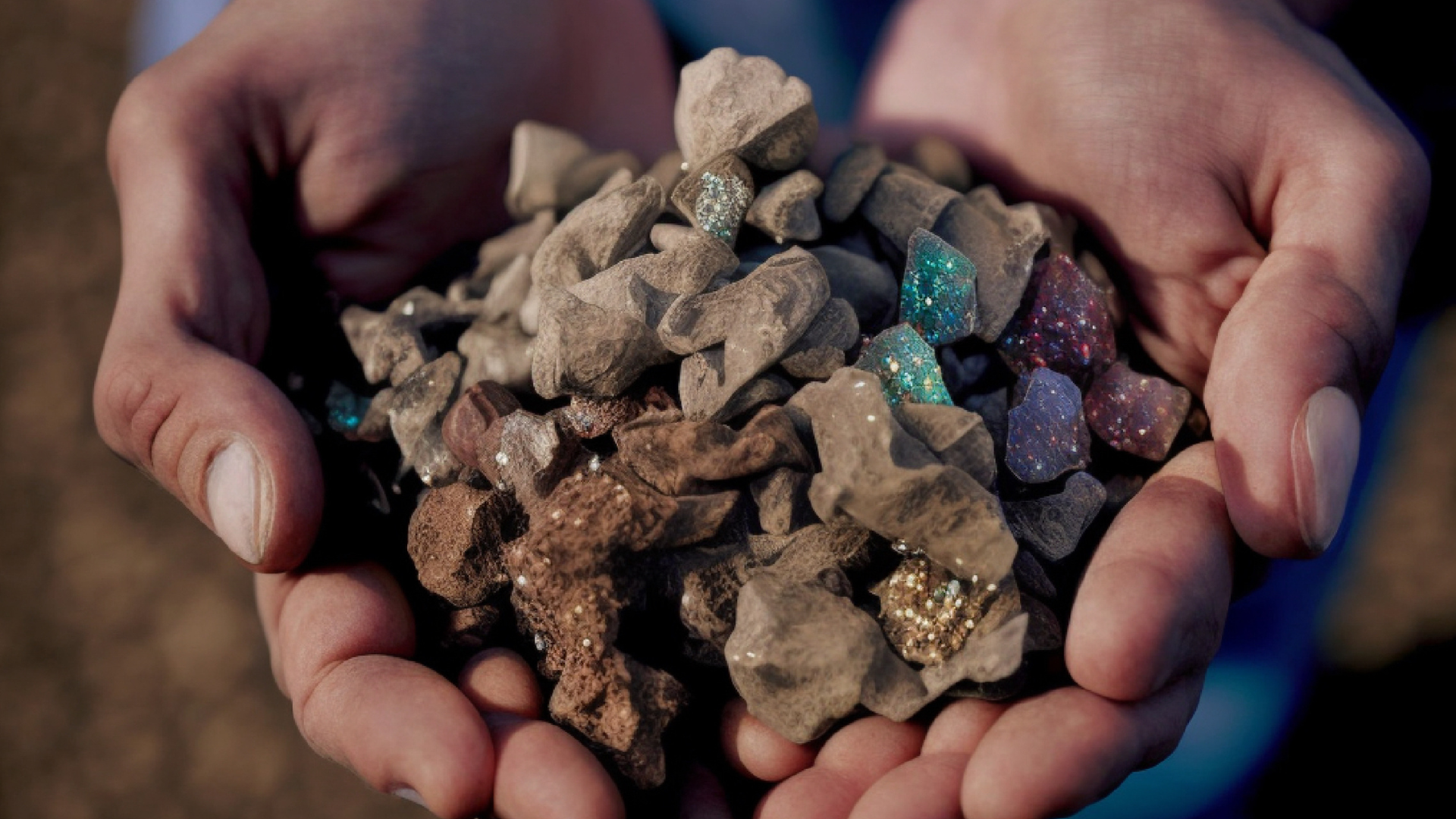
China, the undisputed titan of the rare earth industry, has quietly issued its 2025 rare earth mining and smelting quotas, a move that underscores Beijing’s escalating control over these critical minerals. These quotas, typically a biannual announcement, are now under tighter wraps, with companies reportedly instructed against public disclosure for security reasons. This development has significant implications for global rare earth supply, critical mineral markets, and industries reliant on these essential elements, from electric vehicles (EVs) to renewable energy and advanced defense systems.
The Significance of China's Rare Earth Dominance
Rare earth elements (REEs), a group of 17 chemically similar metallic elements, are indispensable components in a vast array of high-tech applications. Their unique magnetic, catalytic, and optical properties make them vital for modern technologies, including:
Electric Vehicles (EVs) – Used in permanent magnets for EV motors.
Wind Turbines – Essential for high-efficiency generators.
Robotics – Critical for precision motors.
Missiles & Defense – Key for guidance systems and specialized alloys.
Consumer Electronics – Found in smartphones, computers, and display screens.
China has long dominated the rare earth supply chain, controlling a significant portion of global mining, processing, and refining capacity. This strategic position gives Beijing considerable leverage in international trade and geopolitical discussions.
The 2025 Quotas: A Signal of Increased Control
While specific numbers for the 2025 quotas were not publicly released, the very nature of their quiet issuance and the directive for non-disclosure indicate a heightened level of strategic control by the Chinese government. This contrasts with previous years, where such announcements were more transparent.
Several factors likely influence Beijing’s approach to these quotas:
Strategic Resource Control – Rare earths are recognized as strategic national resources. Tightening quotas allows China to manage supply in line with its industrial policies and geopolitical objectives.
Environmental Protection – The mining and processing of rare earths can be environmentally intensive. Quotas are often used as a tool to regulate production, reduce pollution, and promote more sustainable practices within the domestic industry.
Market Stability – By controlling supply, China can influence global prices and ensure stability within its domestic industry, preventing oversupply or excessive price volatility.
Consolidation of Power – Beijing has been systematically consolidating its rare earth industry, narrowing access to quotas. Last year, only two state-owned groups were eligible, a reduction from six previously. This centralization of control enhances the government’s ability to direct the industry’s future.
A notable point from the article is the delay in issuing the quotas, partly attributed to a proposal to include imported ore within the quota system. This proposal faced opposition from companies that rely on these imports for their processing operations, highlighting internal tensions within China’s strategy.
Global Implications and Market Reactions
The implications of China’s tightening rare earth quotas reverberate across the global rare earth market and beyond:
Supply Uncertainty – Reduced transparency and stricter quotas can introduce greater uncertainty into the global supply of rare earth elements, potentially leading to price volatility and supply disruptions for international buyers.
Price Impacts – Any restriction or perceived restriction on supply from the world’s largest producer can exert upward pressure on rare earth prices, impacting the manufacturing costs of various high-tech products.
Diversification Efforts Intensify – The ongoing consolidation and strategic control by China will further accelerate global efforts to diversify rare earth supply chains. Countries like the United States, Australia, and Canada are actively investing in new mining and processing capabilities to reduce their reliance on Chinese sources. This includes exploring new deposits, developing alternative extraction technologies, and building out domestic refining capacity.
Geopolitical Leverage: -China’s continued control over rare earth supply reinforces its position as a key player in critical minerals geopolitics, allowing it to use its dominant market position as leverage in trade negotiations and international relations.
Outlook for Critical Mineral Markets
The 2025 rare earth quotas are a clear signal that China intends to maintain, if not strengthen, its strategic command over this vital sector. For industries globally, this means continued vigilance regarding rare earth supply security and an intensified push towards building more resilient and diversified critical mineral supply chains. The quiet nature of the announcement itself suggests a strategic intent to manage global expectations and maintain flexibility in a geopolitically sensitive market.
Start Trading with Orient Futures Singapore
Being an Overseas Intermediary of Shanghai International Energy Exchange (INE), Dalian Commodity Exchange (DCE), and Zhengzhou Commodity Exchange (ZCE), when foreign clients participate in internationalised futures contracts in these Chinese markets with us, they have direct access to trading, clearing, and settlement. Our parent company, Shanghai Orient Futures, is the largest broker in terms of aggregated volume across the five regulated exchanges in China.
Orient Futures Singapore also currently holds memberships at the Singapore Exchange (SGX), Asia Pacific Exchange (APEX), and ICE Futures Singapore (ICE SG). Starting August 2023, corporate clients can also gain access to the B3 Exchange through us, opening additional trading avenues.
Expect streamlined processes and an easy-to-use interface designed for minimal latency, accompanied by our team’s round-the-clock availability on trading days to provide assistance for all your trading needs.