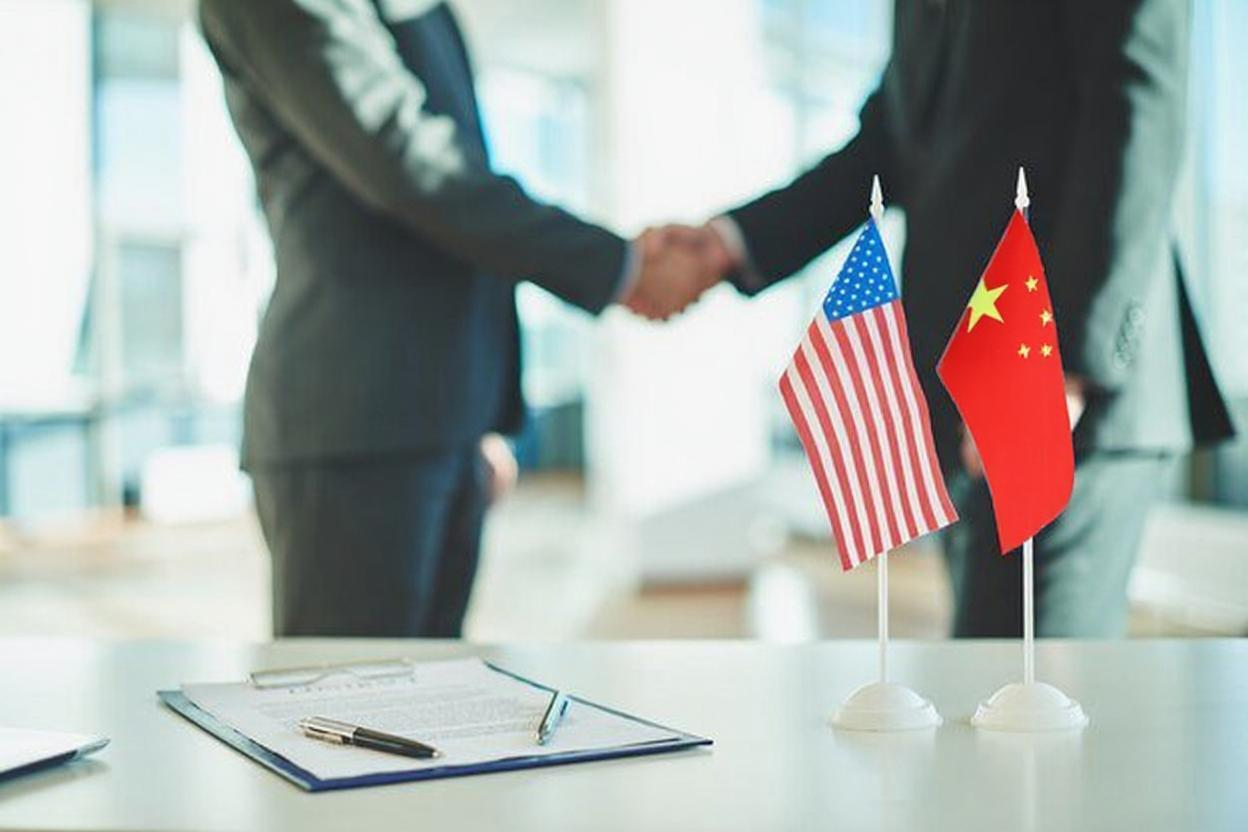
A palpable sense of relief has rippled through global financial markets following the recent announcement of a trade deal between the United States and China. Described as a “delicate truce” by some, this agreement, affirmed by Beijing and U.S. President Donald Trump, aims to de-escalate a prolonged period of tariff-fueled tension between the world’s two largest economies. While specifics remain to be fully detailed, the consensus signals a significant shift, potentially ushering in a new phase of market stability.
The Nature of the Truce: A Step Towards Consensus
The breakthrough came after a crucial telephone conversation between President Trump and China’s President Xi Jinping, swiftly followed by further talks in London. According to Reuters, China has affirmed its commitment to the consensus, emphasising that “China has always kept its word and delivered results… Now that a consensus has been reached, both sides should abide by it.”
President Trump, expressing satisfaction, indicated key components of the deal, including China’s commitment to supply “Full magnets, and any necessary rare earths, up front.” He also outlined specific tariff adjustments: U.S. goods entering China would face 10% tariffs, while Chinese exports to the U.S. would be subject to an effective 55% rate, a sum that includes a baseline “reciprocal” tariff, a tariff related to fentanyl concerns, and pre-existing levies from his first term. While these details provide a framework, the precise implementation remains to be seen, lending a “delicate” quality to this newfound calm.
Market Reactions and the Restoration of Confidence
The immediate market response to the truce has been cautiously optimistic. Asian stock markets generally saw positive movements, and the S&P 500, having recovered from earlier tariff-induced drops, initially showed positive reactions, though some recent sessions have seen mixed results as markets digest the details and underlying economic data. This de-escalation contrasts sharply with previous periods of intense volatility, where tariff threats could cause significant market plunges and uncertainty.
The resolution of trade tensions, even if partial, removes a major overhang for global investors and businesses. The prospect of reduced tariffs, or at least a halt to their escalation, alleviates fears of further supply chain disruptions, rising input costs, and dampened consumer demand.
Broader Economic Implications
The implications of this truce could be far-reaching across the global economy:
Supply Chains – Businesses, which had begun implementing “China+1” diversification strategies to mitigate tariff risks, may find some stability. While long-term shifts could continue, the immediate pressure to re-shore or completely re-route supply chains is expected to ease, potentially leading to more predictable manufacturing and logistics environments.
Commodity Prices – The agreement on critical materials like rare earths and magnets, which are vital for various high-tech and industrial sectors, could lead to stabilised supply and potentially less volatile pricing for these essential commodities. Reduced trade barriers, in general, can influence global demand and pricing for various raw materials.
Inflationary Pressures – For consumers, particularly in the U.S., a de-escalation of tariffs could translate into less upward pressure on imported goods prices, potentially easing overall inflation concerns.
Business Investment – The reduction in trade uncertainty may encourage businesses to release capital previously held back due to geopolitical risks. This could spur increased cross-border investment and expansion plans.
Global Growth Outlook – International financial bodies had cited trade tensions as a significant drag on global economic growth. This truce, even if fragile, could lead to a more optimistic economic forecasts, fostering a more conducive environment for international trade and cooperation.
A Delicate Balance Remains
Despite the optimism, it’s crucial to acknowledge that this is a “delicate truce.” The specifics of the deal’s implementation, the ongoing underlying structural issues in US-China trade relations, and the potential for future geopolitical shifts mean that the path forward may still present challenges. However, for now, the markets can breathe a collective sigh of relief as the immediate uncertainty surrounding trade tariffs appears to have, at least temporarily, subsided.
Start Trading with Orient Futures Singapore
Being an Overseas Intermediary of Shanghai International Energy Exchange (INE), Dalian Commodity Exchange (DCE), and Zhengzhou Commodity Exchange (ZCE), when foreign clients participate in internationalised futures contracts in these Chinese markets with us, they have direct access to trading, clearing, and settlement. Our parent company, Shanghai Orient Futures, is the largest broker in terms of aggregated volume across the five regulated exchanges in China.
Orient Futures Singapore also currently holds memberships at the Singapore Exchange (SGX), Asia Pacific Exchange (APEX), and ICE Futures Singapore (ICE SG). Starting August 2023, corporate clients can also gain access to the B3 Exchange through us, opening additional trading avenues.
Expect streamlined processes and an easy-to-use interface designed for minimal latency, accompanied by our team’s round-the-clock availability on trading days to provide assistance for all your trading needs.