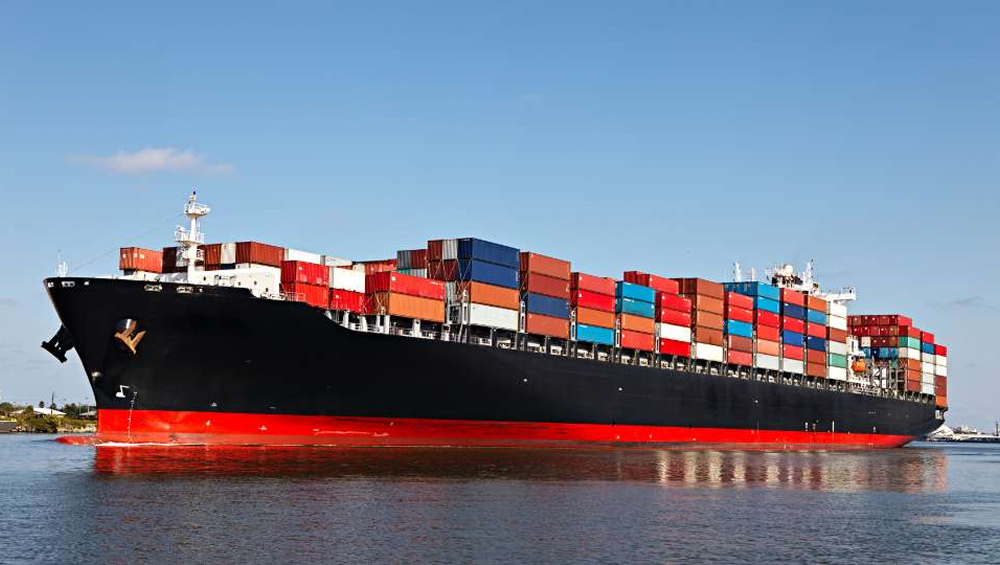
Freight futures markets are signaling a sharp decline in container rates in the coming months, driven by growing concerns over excess capacity. According to brokers and analysts, freight rates for container exports from China are expected to drop by as much as 70% by June next year. This forecast aligns with the current trend, as spot rates for Asia-bound trades have already fallen to their lowest levels since May.
The Shanghai Containerized Freight Index (SCFI), which tracks various trade routes from China, reached its peak in July. At the end of August, it fell 134 points ending at 2,963 points on August 30.
According to Linerlytica, futures contracts traded on the Shanghai International Energy Exchange indicate that freight futures markets expect continued declines over the next 12 months.
The pricing of these forward contracts suggests there will be no rate rebound at the end of this year, nor a repeat of the post-Chinese New Year rally seen in 2024. This pessimistic outlook is also reflected in the Baltic Forward Assessments, where a 12-month forward contract for shipping from Asia to Northern Europe in 2025 is priced at $5,650 per 40-foot equivalent unit (FEU). This is a significant drop from the spot market rate of $7,782 per FEU recorded earlier this week.
Factors Causing Dip in Container Freight Rates
The decline in forward pricing is driven by growing concerns over the newbuilding orderbook size amid the ongoing uncertainty surrounding the Red Sea crisis. Shipbroker Braemar estimates that the crisis is currently reducing the forecasted container ship overcapacity by half. However, this could change with the scheduled delivery of 366 vessels, adding 3.1 million Twenty-foot Equivalent Units (TEU) of new capacity in late 2024 and 2025.
Jonathan Roach, an analyst at Braemar, commented, “The geopolitical situation provides a buffer against structural overcapacity in the industry — but this might not last indefinitely. The substantial newbuilding orderbook is expected to put significant downward pressure on earnings through the end of 2025, regardless of geopolitical factors.”
Roach further noted that if Red Sea navigation for container shipping resumes, the impact of overcapacity could be swift, leading to a noticeable drop in earnings. Currently, the closure of Red Sea transit has reduced vessel overcapacity to below 7% annually, down from up to 16% without the closure. If the Red Sea remains open, overcapacity could rise to 10% next year or even reach 19% if the closure is lifted.
Mixed Market Outlook
The short-term outlook for freight rates is uncertain. Transpacific eastbound rates experienced a slight decline at the end of August, despite the potential for a port strike on the US East Coast in October.
According to the World Container Index, rates from Shanghai to New York fell by 2% to $8,591 per 40-foot equivalent unit (FEU). Meanwhile, rates to the US West Coast—previously down about 20% from their July peak due to added capacity and possibly peaking demand—increased by over 10% last week following mid-month rate hikes by some carriers, as reported by Freightos. However, reports suggest that carriers are offering discounts below current spot rates, raising doubts about the sustainability of these increases.
To learn more about the Shanghai Containerized Freight Index (SCFI), read:
与东证期货新加坡开启交易
作为 上海期货交易所(SHFE), 上海国际能源交易中心(INE), 大连商品交易所(DCE)以及 郑州商品交易所(ZCE)的境外中介机构,东证期货新加坡为国际化期货合约提供直达交易、清算及结算服务。我们的母公司上海东证期货,是中国五家期货交易所中合计交易量最大的经纪商之一。
除中国市场准入外,东证期货新加坡亦是新加坡交易所(SGX)、新加坡亚太交易所(APEX)及洲际(新加坡)交易所(IFSG)的会员。企业客户更可通过我们参与巴西B3交易所交易,进一步拓展全球交易机会。
东证期货新加坡是亚太交易所、新加坡衍生品交易所以及洲际新加坡交易所的 交易和清算会员, 为客户提供覆盖国际市场的综合交易服务。