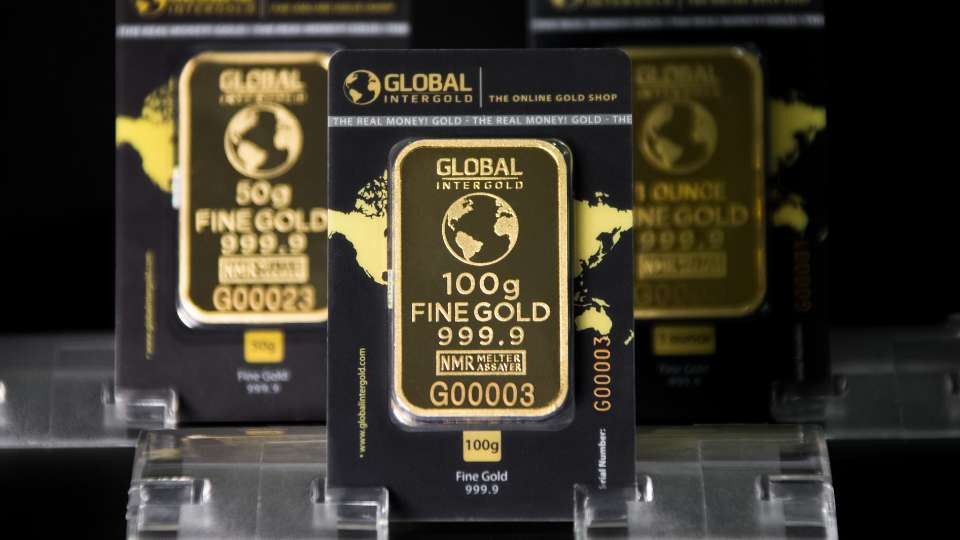
Gold prices soared to an all-time high on March 14, 2025, breaking the $3,000 per ounce barrier for the first time in history. During morning trading hours on Friday, spot gold hit a new record of $3,004.71 per ounce before pulling back slightly to $2,983.35 by 10:40 a.m. ET. Meanwhile, gold futures in New York reached a high of $3,017 per ounce, just shy of the $3,000 mark for closing prices.
This latest surge underscores gold’s historical role as a store of value during times of market volatility. Investors are seeking a safe haven amid economic uncertainty fueled by Donald Trump’s tariff policies have driven the demand for the yellow metal to unprecedented levels. The metal crossed the $1,000 mark in the aftermath of the 2008 financial crisis, surpassed $2,000 during the COVID-19 pandemic, and has now achieved this new milestone amid the ongoing U.S.-China trade war and rising geopolitical tensions.
Why Is Gold Rallying So Fast?
Gold’s rise to $3,000 per ounce happened much faster than many analysts expected. Over the past year, price targets were repeatedly adjusted upward after gold broke through $2,000 and $2,500. Now, analysts are eyeing the next major level.
According to Bank of America, for gold to reach $3,500 per ounce, investment demand would need to rise by 10%—a challenging but not impossible target.
Gold’s Unstoppable Momentum in 2025
In 2025, gold has surged 14% year-to-date, despite traditional factors like high interest rates and a strong U.S. dollar, which usually dampen gold’s appeal. This upward momentum is largely attributed to the aggressive trade policies of the Trump administration, which have heightened market instability and driven investors towards safe-haven assets.
Gold in 2025 vs. 1980: Inflation-Adjusted Comparison
Despite hitting a record nominal price, gold remains well below its inflation-adjusted peak of 1980, which would be equivalent to around $3,800 per ounce today. In 1980, a mix of economic stagnation, high inflation, and geopolitical crises pushed gold to its previous all-time highs. Some analysts believe that similar forces could propel gold even higher in 2025.
Central Banks Are Driving Gold Demand
A major factor behind gold’s price surge is central bank demand. Since Russia’s invasion of Ukraine in 2022, central banks have doubled their annual gold purchases—from around 500 tonnes per year to over 1,000 tonnes, according to the World Gold Council.
China has been one of the most aggressive buyers, increasing its gold reserves for four consecutive months. As the U.S. tightens trade restrictions, many countries—including China—are stockpiling gold to reduce their reliance on the U.S. dollar.
What’s Next for Gold Prices?
Given current market trends, key factors influencing gold’s trajectory include:
• U.S.-China trade tensions and potential tariff escalations
• Federal Reserve monetary policy and potential interest rate cuts
• Geopolitical instability in Eastern Europe and the Middle East
• Continued central bank gold purchases
With gold proving its resilience as a safe-haven asset, all eyes will be on whether it can sustain its rally and break new records in 2025.
The breaking of the $3,000 gold price milestone marks a historic moment for investors, central banks, and market watchers alike. While economic uncertainty persists, one thing remains clear: gold continues to shine as the ultimate store of value in uncertain times.
与东证期货新加坡开启交易
作为 上海期货交易所(SHFE), Shanghai International Energy Exchange (INE), 大连商品交易所(DCE)以及 郑州商品交易所(ZCE)的境外中介机构,东证期货新加坡为国际化期货合约提供直达交易、清算及结算服务。我们的母公司上海东证期货,是中国五家期货交易所中合计交易量最大的经纪商之一。
除中国市场准入外,东证期货新加坡亦是新加坡交易所(SGX)、新加坡亚太交易所(APEX)及洲际(新加坡)交易所(IFSG)的会员。企业客户更可通过我们参与巴西B3交易所交易,进一步拓展全球交易机会。
东证期货新加坡是亚太交易所、新加坡衍生品交易所以及洲际新加坡交易所的 交易和清算会员, 为客户提供覆盖国际市场的综合交易服务。