How does an NDF work?
Non-Deliverable Forward (NDF) is a cash-settled, and usually short termed, forward contract where the notional amount is never exchanged. It is used in countries that have a non-convertible currency; these currencies are primarily used for domestic transactions instead of trade in the FX market. Some examples of such currencies include the Argentinian peso (ARS), Chinese renminbi, CNY (CNH is traded offshore), South Korean won (KRW), or the Malaysian Ringgit (MYR).
At maturity, the forward rate is compared against the reference rate of that day, this is set by the central bank, or an average rate established by several banks. The difference between the pre-agreed forward rate and the fixing rate is settled in the convertible currency on the due date, allowing a trader to pay or profit from the difference.
The mechanism of an NDF is particularly used in countries with non-convertible currencies as traders can hedge exchange rate risks and the interest rate differential between two currencies. Moreover, non-convertibles tend to have higher interest rates, which makes hedging a larger/more costly investment.
Nonetheless, risks are present as the forward and fixing rates are subject to market forces.
Non-Deliverable Forward (NDF)
Non-deliverable forward is a cash-settled, and usually short termed forward contract where the notional amount is exchanged.
Among the strategies, some traders use the forex carry trade, which is explained by forex.com as the exploiting of different rates of currency appreciation driven largely by inflation and interest rates. However, like all other strategies, trades may be subjected to risks and uncertainties.
Deliverable FX
FX transactions in which the notional amount of the two currencies involved are exchanged and settled between two parties on the same value date. The most used currency for settlement is in U.S. dollar.
Which countries trade NDF?
The main countries that trade or allow NDF deals are London, Singapore, New York, and Hong Kong. Through Orient Futures Singapore, clients can also gain access to NDF currency FX trades.
NDF Currencies
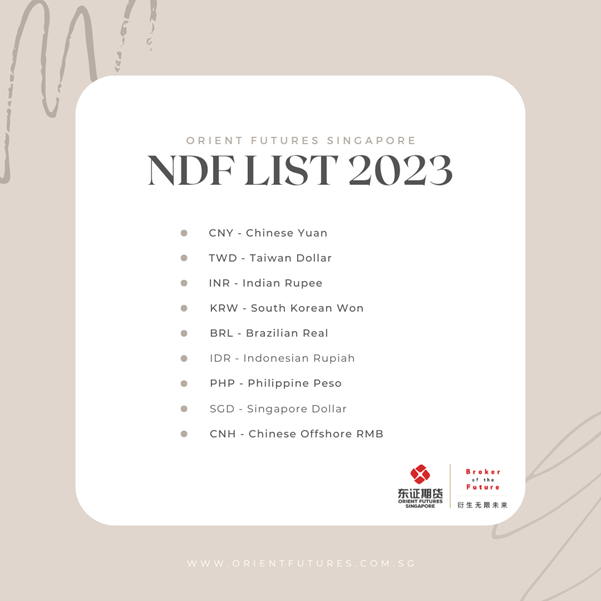
Figure 1: Commonly Traded NDFs: Orient Futures Singapore
Alternatively, other NDFs that are also traded but are less popular include the Egyptian pound, Venezuelan bolivar, and Nigerian Naira.
News on NDF and the Forex Market
Based on the press release by LSEG, NDF matching will be launched fully in Mid-2023. The objective of the launch is to cater to the increasing demand for NDF while strengthening the position of Singapore as a price discovery hub. This leading-edge NDF project is also supported by the MAS (Monetary Authority of Singapore), which is keen to develop Singapore’s FX market to serve the growing trading and hedging needs.
Alternatively, in early Jan, it was also reported by Zawya that the Indian rupee inched up against the dollar on Wednesday, helped by the decline in the USD/INR non-deliverable forwards.
From India, it is reported by Mint that the next RBI move could be to cease any international currency trade domestically, where one leg is in the rupee. This will cause “banks which have taken a position in an NDF contract will be stuck with their trades in the absence of a domestic transaction”. This move was caused by widening gaps between the onshore and offshore rupee rates, suggesting that traders are not in the market and appetites are not as high as in past periods.
东证期货国际(新加坡)简介
我们是 上海东证期货有限公司的直属全资子公司, 也是东方证券股份有限公司的间接控股子公司。
作为持有新加坡金融管理局(MAS)颁发的《资本市场服务许可证》的机构, 我们也是新交所、 亚太交易所和, 洲际(新加坡)交易所的会员。
我司提供 premium customer service at an affordable cost to all our clients. Our team will 场内衍生品、 及杠杆外汇等多类产品。