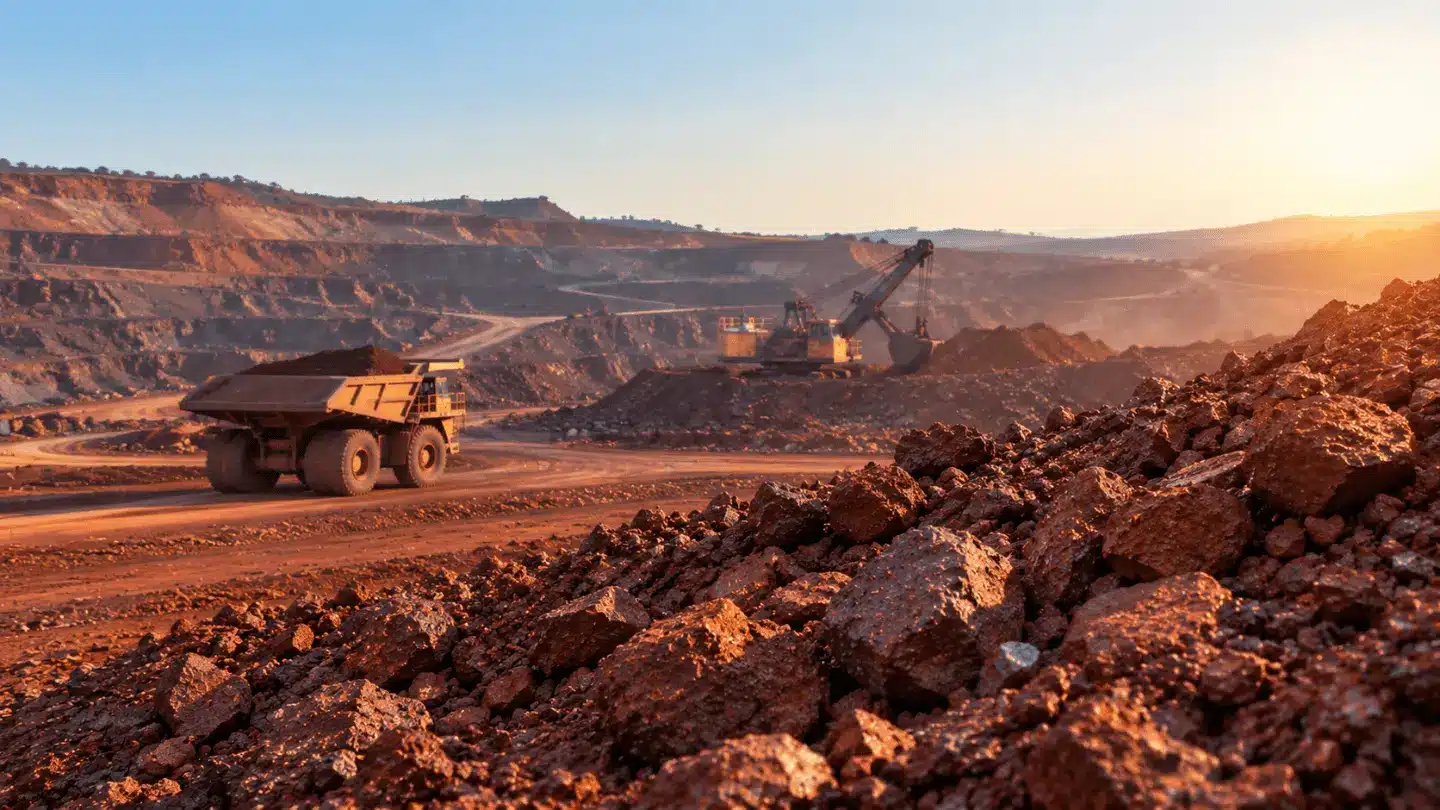
Iron ore is one of the most important raw materials in the global steel industry, with China playing a central role in global demand, imports and steel production.
Listed on the Dalian Commodity Exchange (DCE), Iron Ore Futures provide a RMB-denominated futures market for participants seeking exposure to China’s iron ore market. The contract is widely used for price discovery and risk management across the steel and raw-material supply chain.
For overseas institutional investors, DCE Iron Ore Futures provide a way to participate in China’s domestic commodity market through recognised market access channels.
Understanding DCE Iron Ore Futures
DCE Iron Ore Futures are based on standardised contracts representing iron ore that meets the exchange’s prescribed delivery quality requirements.
The contract trades under the symbol I and is quoted in Chinese yuan per metric tonne. Each futures contract represents 100 metric tonnes of iron ore, making the product particularly relevant to commercial participants with exposure to the physical iron ore and steel markets.
China’s position as a major iron ore importer and steel producer means developments in Chinese steel production, property and infrastructure activity, port inventories, environmental policies and raw-material demand can have a significant influence on iron ore pricing.
DCE Iron Ore Futures provide market participants with a China-focused instrument for managing these price exposures.
Why Trade DCE Iron Ore Futures?
Iron ore prices are influenced by a combination of global supply conditions and China’s domestic steel demand.
On the supply side, production and shipments from major exporting regions such as Australia and Brazil can affect the availability of seaborne iron ore. On the demand side, Chinese steel production, blast-furnace utilisation, infrastructure activity and construction demand are among the factors that can influence consumption.
DCE Iron Ore Futures can therefore be used by market participants to:
- Manage iron ore price risk arising from physical purchases or sales
- Hedge exposure across the steel and raw-material supply chain
- Gain RMB-denominated exposure to China’s iron ore market
- Monitor China’s domestic price discovery for iron ore
- Develop commodity trading and relative-value strategies
- Diversify exposure across global and Chinese commodity markets
The contract may be relevant to:
- Iron ore traders and merchants
- Steel producers and mills
- Mining and resources companies
- Commodity trading firms
- Steel distributors and processors
- Hedge funds and proprietary trading firms
- Asset managers and institutional investors
- Other businesses with exposure to ferrous commodities
DCE Iron Ore Futures Contract Specifications
Dalian Commodity Exchange (DCE) lists Iron Ore Futures under the contract symbol I.
| Specification | DCE Iron Ore Futures | |
|---|---|---|
| Listing Exchange | Dalian Commodity Exchange (DCE) | |
| Contract Symbol | I | |
| Underlying | Iron Ore | |
| Contract Size | 100 metric tonnes per lot | |
| Price Quotation | CNY per metric tonne | |
| Minimum Tick Size | CNY 0.5 per metric tonne | |
| Daily Price Limit | 4% of the previous settlement price* | |
| Contract Months | January-December | |
| Trading Hours | 9:00–11:30 a.m.; 1:30–3:00 p.m. (Beijing Time*) | |
| Last Trading Day | 10th trading day of the delivery month | |
| Delivery | Physical delivery | |
| Delivery Location | DCE-designated warehouses and delivery locations | |
| Minimum Trading Margin | 5% of contract value* | |
*Trading hours, price limits, margins and other trading parameters may be adjusted by DCE. Participants should refer to the latest exchange rules and trading parameters before trading.
The DCE’s published Iron Ore Futures material confirms the 100 MT contract size, CNY/MT quotation, 0.5 CNY/MT tick size, monthly contract cycle, physical delivery and 10th-trading-day last trading day.
What Drives DCE Iron Ore Prices?
Unlike many commodities, iron ore pricing is closely linked to China’s steelmaking cycle.
Chinese steel demand
China is a major consumer of iron ore because of its large steel-producing industry. Changes in construction, infrastructure, manufacturing and property activity can influence demand for steel and, consequently, iron ore.
Steel production
Iron ore is primarily used as a raw material for steelmaking. Changes in crude steel output, blast-furnace utilisation and mill profitability can therefore affect iron ore consumption.
Seaborne supply
Australia and Brazil are among the world’s major iron ore exporters. Changes in mine production, shipments, weather disruptions, port operations and freight conditions can influence the supply available to Chinese buyers.
Port inventories
Chinese port inventories are closely watched by iron ore market participants. Inventory changes can provide indications of the balance between incoming supply and downstream demand.
Chinese policy
Government policies affecting steel production, infrastructure investment, environmental controls and the property sector can have an impact on both steel and iron ore demand.
Steel mill margins
The profitability of steel mills can influence purchasing behaviour. When margins are compressed, mills may adjust production and raw-material procurement, potentially affecting iron ore demand.
DCE Iron Ore and China's Steel Supply Chain
Iron ore sits near the beginning of China’s steel production chain.
A simplified supply chain is:
Iron Ore → Sinter/Pellets → Pig Iron → Steel → Construction, Manufacturing & Infrastructure
This connection makes DCE Iron Ore Futures relevant not only to commodity traders but also to businesses further along the steel value chain.
For example, a steel producer may use iron ore futures to manage the price risk associated with its raw-material purchases, while a commodity trader may use the contract to hedge physical inventory or manage exposure between different markets.
DCE Iron Ore vs Global Iron Ore Markets
Iron ore is traded and referenced through several international markets and pricing mechanisms.
DCE Iron Ore Futures are distinctive because they provide RMB-denominated price exposure within China’s domestic futures market.
For participants active in Asia, this can provide a useful complement to international iron ore benchmarks and other derivative instruments.
Market participants may compare DCE prices with international iron ore benchmarks to analyse:
- Regional price differences
- China domestic versus seaborne market conditions
- Currency effects
- Freight and logistics costs
- Steel mill economics
- Cross-market arbitrage opportunities
The relationship between China’s domestic market and the international seaborne market can create opportunities for hedging and relative-value strategies.
Accessing DCE Iron Ore Futures from Overseas
Eligible overseas investors can access DCE products through recognised market access frameworks.
For internationalised products, overseas participants can trade through an approved Overseas Intermediary (OI) without necessarily establishing an onshore Chinese trading operation.
DCE products may also be accessible through the Qualified Foreign Investor (QFI) framework, subject to applicable eligibility and regulatory requirements.
Orient Futures Singapore provides institutional clients with access to China’s futures markets through the applicable overseas market access arrangements.
As an Overseas Intermediary, Orient Futures Singapore provides access to internationalised Chinese futures products across multiple exchanges, allowing institutional clients to manage their China market exposure through a Singapore-based relationship.
Why Trade DCE Iron Ore Through Orient Futures Singapore?
Orient Futures Singapore is a Singapore-based brokerage regulated by the Monetary Authority of Singapore and provides institutional market access to China’s futures markets.
Our capabilities include:
- Access to DCE internationalised products
- Institutional access to DCE Iron Ore Futures
- Support for applicable QFI market access
- Professional trade execution
- Multi-exchange connectivity
- Low-latency trading infrastructure
- Access to Chinese and global commodity markets
- Institutional account onboarding and support
For commodity trading firms, hedge funds, proprietary trading firms and other institutional investors, access to DCE Iron Ore Futures can provide an additional tool for managing exposure to China’s steel and raw-material markets.
Access DCE Iron Ore Futures Through Orient Futures Singapore
Whether your objective is to hedge physical iron ore exposure, manage steel-related commodity risk, participate in China’s domestic futures market or develop cross-market trading strategies, DCE Iron Ore Futures can provide an important instrument for accessing China’s ferrous commodities market.
Speak with Orient Futures Singapore to learn more about accessing DCE Iron Ore Futures and China’s commodity markets.
Frequently Asked Questions
Q: What is DCE Iron Ore Futures?
Q: What is the DCE Iron Ore contract size?
Q: What is the ticker symbol for DCE Iron Ore?
Q: What is the minimum tick size?
Q: When are DCE Iron Ore Futures traded?
Q: How are DCE Iron Ore Futures settled?
Q: When is the last trading day?
Q: Who trades DCE Iron Ore Futures?
Q: Why is DCE Iron Ore important to global commodity markets?
About the Author
Chong Yung Lik
Business Development Manager
Orient Futures Singapore
LinkedIn
Chong Yung Lik is a business development manager at Orient Futures Singapore, working across the full client lifecycle for institutions seeking access to China and global futures markets. As part of the Orient Futures Singapore sales team, he supports overseas clients through account opening, margin and settlement procedures, and ongoing relationship management across China and global futures and derivatives products. His articles draw on direct, team-grounded experience with the operational realities of accessing China and international markets.