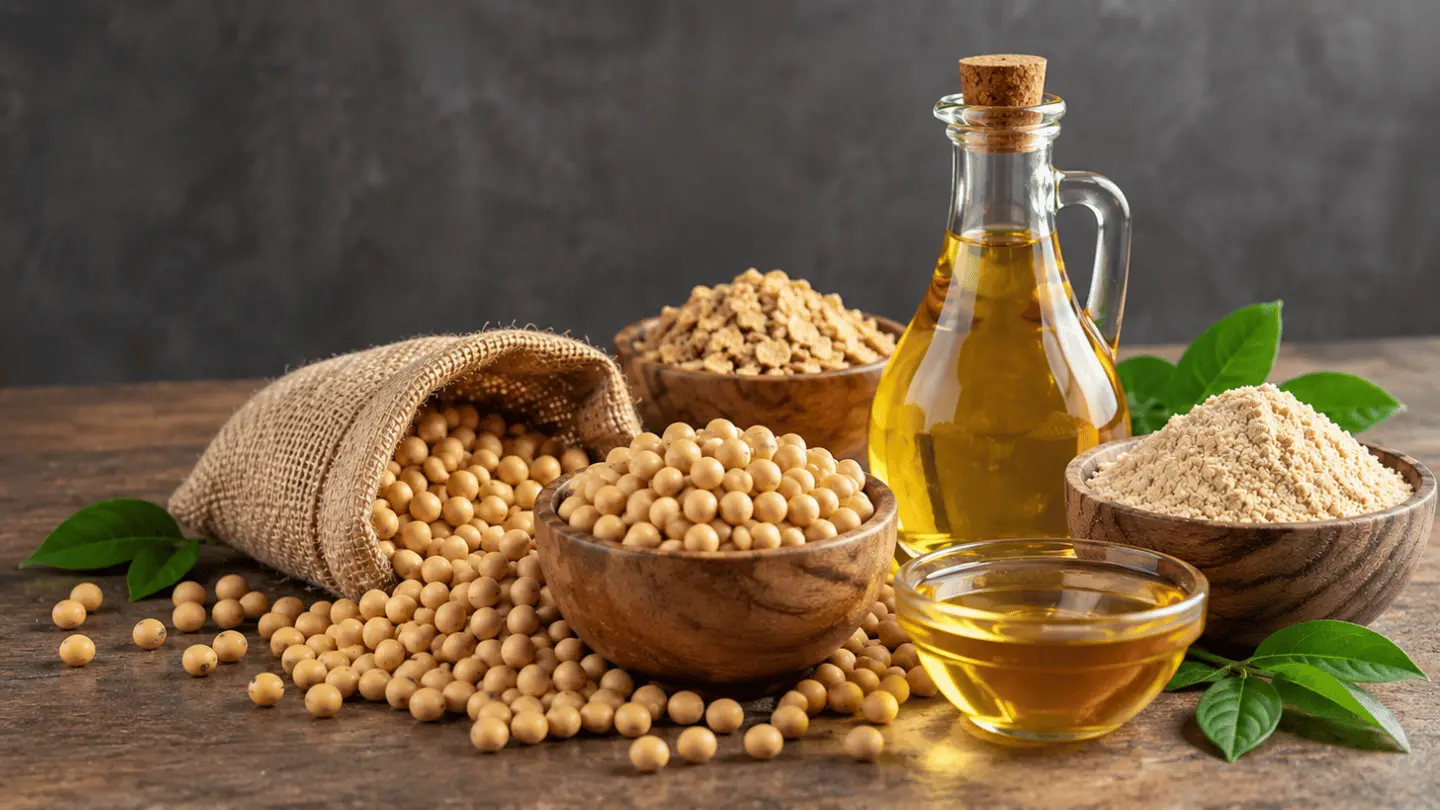
DCE Soybean Futures and Options comprise four internationally accessible agricultural derivatives: No.1 Soybean, No.2 Soybean, Soybean Meal and Soybean Oil. Listed on the Dalian Commodity Exchange (DCE), these contracts provide exposure to China’s soybean supply chain, from raw soybean production and imports to animal feed and edible oil markets. No.1 Soybean covers non-GMO soybeans primarily used for food consumption, while No.2 Soybean includes GMO and non-GMO soybeans commonly used for crushing into soybean meal and soybean oil.
Since 26 December 2022, all four futures and options contracts have been available to eligible overseas institutional investors through China’s internationalised futures market framework. Overseas participants may access these products through approved Overseas Intermediaries, such as Orient Futures Singapore, or via the Qualified Foreign Investor (QFI) framework.
Institutions looking to trade soybean futures and options in China’s domestic market, rather than other international venues, use these DCE contracts as their primary route into Chinese soybean trading.
As one of the most actively traded agricultural futures markets in China, the DCE soybean market gives overseas participants a direct view into China’s soybean futures price formation, alongside a way to hedge or gain exposure to the country’s agricultural import and crushing cycle.
If you’re new to China’s derivatives market, we recommend starting with our 《中国市场准入指南》 ,再进一步了解以下具体路径: 国际化路径 和 合格境外投资者(QFI)制度.
What Is DCE Soybean?
The DCE soybean complex consists of four interconnected products: No.1 Soybean, No.2 Soybean, Soybean Meal and Soybean Oil. Together they represent China’s soybean supply chain from raw soybeans, sourced both domestically and through imports, through crushing to animal feed and edible oil production.
China is the world’s largest soybean importer, bringing in over 100 million tonnes annually and accounting for more than 60% of global soybean imports. China is also among the largest consumers of soybean meal and soybean oil globally, driven by its livestock and aquaculture feed industry and its edible oil market. DCE soybean prices are widely used by crushers, feed mills and edible oil producers for hedging and price discovery, making the exchange’s soybean complex one of the most closely watched agricultural futures markets in China.
The soybean value chain can be broadly divided into three segments:
- 大豆 (raw agricultural commodity), available on DCE as No.1 Soybean or No.2 Soybean
- 豆粕 (animal feed ingredient)
- 豆油 (edible oil product)
When soybeans are processed, they are crushed into soybean meal and soybean oil: approximately 80% of crushed soybeans convert to meal, and around 20% converts to oil. Because meal and oil are joint products of the same crushing process, their combined value relative to the input soybean price, commonly called the crush margin or crush spread, is closely tracked by commercial participants and often forms the basis for spread trading and hedging strategies.
What Is the Difference Between No.1 and No.2 Soybean?
DCE lists the soybean contract as two separate contracts, No.1 Soybean and No.2 Soybean, distinguished by origin and GMO status, which is a common point of confusion for anyone new to this market.
| 特性 | No.1 Soybean | No.2 Soybean |
|---|---|---|
| 标的物 | Non-GMO soybeans | Mainly imported GMO soybeans |
| Origin | Primarily domestic Chinese soybeans | Primarily imported soybeans |
| Delivery Standard | Non-GMO soybeans only | Both GMO and non-GMO soybeans accepted |
| Quality Basis | Edible-grade standard, centered on grain purity rate | Oil-pressing grade standard, centered on crude fat content |
| Market Focus | Domestic Chinese market | International soybean trade |
| Main Pricing Driver | Domestic supply/demand and state stockpiling policy | US and Brazilian soybean prices, exchange rates, and shipping costs |
| Key Participants | Food processors and producers | Crushers and importers |
| International Exposure | Lower | 较高 |
No.1 Soybean represents non-GMO soybeans grown primarily within China, historically used as the benchmark for food-grade and domestic consumption soybean pricing.
No.2 Soybean represents predominantly GMO soybeans, sourced largely from overseas imports (mainly from Brazil, the United States and Argentina), and used mainly as a crushing input for oil and meal production rather than for direct food consumption.
What Is DCE Soybean Meal?
Soybean Meal is based on the meal produced when soybeans are crushed. Soybean meal is a primary protein source for China’s livestock and aquaculture feed industry, and demand from pig farming, poultry and aquaculture cycles directly affects soybean meal consumption and, by extension, crushing demand for soybeans.
Because meal is a joint product of the same crushing process that produces soybean oil, its price is closely linked to both the underlying soybean contracts and to Soybean Oil and is a core input into the crush margin that many commercial participants hedge against.
What Is DCE Soybean Oil?
Soybean Oil is based on the edible oil extracted from crushed soybeans. Soybean oil competes with palm oil, rapeseed oil and other edible oils, and price movements in these substitute markets can influence soybean oil demand and, indirectly, crushing economics.
Government policies affecting agricultural imports, reserve releases, and tariffs can also influence overall soybean market pricing, including the No.1/No.2 Soybean spread and the meal-oil crush spread.
Which DCE Soybean Contract Should You Trade?
| Objective | 品种 |
|---|---|
| Exposure to Chinese domestic soybean demand | No.1 Soybean |
| Exposure to global soybean import flows | No.2 Soybean |
| Livestock and aquaculture feed demand | 豆粕 |
| Edible oils and cooking oil market | 豆油 |
What Drives DCE Soybean Prices?
Import supply
China imports most of its soybean consumption, mainly from Brazil, the United States and Argentina, making No.2 Soybean prices sensitive to external factors such as shipping schedules, weather in these growing regions, and trade policy.
Chinese crushing demand
Soybean meal is a primary protein source for China’s livestock and aquaculture feed industry. Demand from pig farming, poultry and aquaculture cycles directly affects soybean meal consumption and, by extension, crushing demand for soybeans.
The crush spread in China
Because meal and oil are joint products of crushing, their combined value relative to the soybean price (the “crush margin” or “crush spread”) influences processing volumes. A wider crush margin typically encourages more crushing activity, while a narrower margin can reduce it.
Institutions trading the China soybean crush spread often use DCE Soybean Options alongside the underlying futures to structure this exposure with defined risk, since soybean options in China provide a way to express a view on the spread without the full margin commitment of an outright futures position.
Edible oil substitution
Soybean oil competes with palm oil, rapeseed oil and other edible oils. Price movements in these substitute markets can influence soybean oil demand and, indirectly, crushing economics.
Domestic policy and reserves
Government policies affecting agricultural imports, reserve releases, and tariffs can influence both the No.1/No.2 Soybean spread and overall soybean complex pricing.
Why Trade DCE Soybean, Meal and Oil Futures and Options?
As one of the most liquid corners of China’s agricultural futures market, these contracts can also be used by market participants to:
- Hedge price risk on physical soybean, meal or oil purchases and sales
- Manage crushing margin exposure between soybean and its meal and oil outputs
- Gain RMB-denominated exposure to China’s soybean market
- Monitor China’s domestic price discovery for agricultural commodities
- Trade DCE soybean options to express a directional or spread view with defined risk
- Develop cross-arbitrage strategies between No.1 and No.2 Soybean, or between meal and oil
- Diversify agricultural trading strategies across global and Chinese markets
These contracts may be relevant to:
- Soybean, meal and oil traders and merchants
- Crushing plants and oilseed processors
- Animal feed producers
- Agricultural trading firms
- 大宗商品贸易公司
- 对冲基金与自营交易团队
- 资产管理机构与机构投资者
How Can Overseas Investors Trade DCE Soybean?
For internationalised products, overseas participants can trade through an approved 境外中介(OI) without necessarily establishing a mainland entity.
These products may also be accessible through the 合格境外投资者(QFI) framework, subject to applicable eligibility and regulatory requirements.
Orient Futures Singapore provides institutional clients with access to China’s futures markets through the applicable overseas market access arrangements, and holds Overseas Intermediary status on 大连商品交易所(DCE) alongside 上海期货交易所(SHFE), 上海国际能源交易中心(INE), 郑州商品交易所(ZCE) 与 广州期货交易所(GFEX).
Orient Futures Singapore is a Singapore-based brokerage regulated by the Monetary Authority of Singapore (MAS) and provides institutional market access to China’s commodity markets.
我司的核心能力包括:
- Access to DCE internationalised products, including No.1 Soybean, No.2 Soybean, Soybean Meal and Soybean Oil
- Institutional access to the full DCE soybean market
- Support for applicable QFI market access
- Professional trade execution
- 多交易所互联互通
- 低延迟交易基础设施
- Access to Chinese and global agricultural commodity markets
- Institutional account onboarding and support
For agricultural trading firms, crushing plants, hedge funds, proprietary trading firms and other institutional investors, access to DCE’s soybean market can provide an additional tool for managing exposure to China’s agricultural and feed markets.
Access DCE Soybean Through Orient Futures Singapore
Whether your objective is to hedge physical soybean or crush-margin exposure, manage agricultural commodity risk, participate in China’s domestic futures market or develop cross-product arbitrage strategies, DCE’s soybean, meal and oil contracts can provide an important set of instruments for accessing China’s agricultural markets.
Speak with Orient Futures Singapore to learn more about accessing DCE Soybean products and China’s commodity markets.
DCE Soybean Futures Contract Specifications
Dalian Commodity Exchange (DCE) lists No.1 Soybean, No.2 Soybean, Soybean Meal and Soybean Oil as both futures and options, each under a 10-metric-tonne contract size, quoted in CNY per metric tonne, and settled by physical delivery for futures.
| 合约规格 | 期货 | 期权 |
|---|---|---|
| 上市交易所 | 大连商品交易所(DCE) | |
| 交易代码 | A |
看涨期权: A-Month-C-Strike 看跌期权: A-Month-P-Strike |
| 标的物 | Non-GMO soybean | No.1 Soybean Futures (A) |
| 交易单位 | 10 metric tonnes per lot | 1 No.1 Soybean Futures contract (10 MT) |
| 报价单位 | CNY per metric tonne | CNY per metric tonne |
| 最小变动价位 | CNY 1 per metric tonne | CNY 0.5 per metric tonne* |
| 涨跌停板幅度 | 4% of previous settlement price* | Same as underlying futures* |
| 合约月份 | January, March, May, July, September, November | Corresponding futures months |
| 行权方式 | - | 美式期权 |
| 交割方式 | 实物交割 | Exercise into underlying futures |
| 交易时间 | 9:00-11:30am; 1:30-3:00pm (Beijing)*, plus other exchange-prescribed sessions | |
| 最后交易日 | 10th trading day of the contract month | Regular Options: 12th trading day of the month immediately preceding the delivery month of the underlying futures contract; Serial Options: 12th trading day of the 2nd month preceding the delivery month of the underlying futures contract; Subject to exchange rules and adjustments |
| 到期日 | - | 同最后交易日 |
| 准入路径 | 国际化 与 合格境外投资者(QFI) | |
*Trading hours, price limits, tick sizes, margins and other trading parameters may be adjusted by DCE. Participants should refer to the latest exchange rules and trading parameters before trading.
| 合约规格 | 期货 | 期权 |
|---|---|---|
| 上市交易所 | 大连商品交易所(DCE) | |
| 交易代码 | B |
看涨期权: B-Month-C-Strike 看跌期权: B- Month-P-Strike |
| 标的物 | GMO soybean (import) | No.2 Soybean Futures (B) |
| 交易单位 | 10 metric tonnes per lot | 1 No.2 Soybean Futures contract (10 MT) |
| 报价单位 | CNY per metric tonne | CNY per metric tonne |
| 最小变动价位 | CNY 1 per metric tonne | CNY 0.5 per metric tonne* |
| 涨跌停板幅度 | 4% of previous settlement price* | Same as underlying futures* |
| 合约月份 | January, February, March, April, May, June, July, August, September, October, November, December | Corresponding futures months |
| 行权方式 | - | 美式期权 |
| 交割方式 | 实物交割 | Exercise into underlying futures |
| 交易时间 | 9:00-11:30am; 1:30-3:00pm (Beijing)*, plus other exchange-prescribed sessions | |
| 最后交易日 | 10th trading day of the contract month | 12th trading day of the month immediately preceding the delivery month of the underlying futures contract; Subject to exchange rules and adjustments |
| 到期日 | - | 同最后交易日 |
| 准入路径 | 国际化 与 合格境外投资者(QFI) | |
| 合约规格 | 期货 | 期权 |
|---|---|---|
| 上市交易所 | 大连商品交易所(DCE) | |
| 交易代码 | M |
看涨期权: M-Month-C-Strike 看跌期权: M-Month-P-Strike |
| 标的物 | 豆粕 | Soybean Meal Futures (M) |
| 交易单位 | 10 metric tonnes per lot | 1 Soybean Meal Futures contract (10 MT) |
| 报价单位 | CNY per metric tonne | CNY per metric tonne |
| 最小变动价位 | CNY 1 per metric tonne | CNY 0.5 per metric tonne* |
| 涨跌停板幅度 | 4% of previous settlement price* | Same as underlying futures* |
| 合约月份 | January, March, May, July, August, September, November, December | Corresponding futures months |
| 行权方式 | - | 美式期权 |
| 交割方式 | 实物交割 | Exercise into underlying futures |
| 交易时间 | 9:00-11:30am; 1:30-3:00pm (Beijing)*, plus other exchange-prescribed sessions | |
| 最后交易日 | 10th trading day of the contract month | Regular Options: 12th trading day of the month immediately preceding the delivery month of the underlying futures contract; Serial Options: 12th trading day of the 2nd month preceding the delivery month of the underlying futures contract; Subject to exchange rules and adjustments |
| 到期日 | - | 同最后交易日 |
| 准入路径 | 国际化 与 合格境外投资者(QFI) | |
| 合约规格 | 期货 | 期权 |
|---|---|---|
| 上市交易所 | 大连商品交易所(DCE) | |
| 交易代码 | Y |
看涨期权: Y-Month-C-Strike 看跌期权: Y-Month-P-Strike |
| 标的物 | Soybean oil | Soybean Oil Futures (Y) |
| 交易单位 | 10 metric tonnes per lot | 1 Soybean Oil Futures contract (10 MT) |
| 报价单位 | CNY per metric tonne | CNY per metric tonne |
| 最小变动价位 | CNY 1 per metric tonne | CNY 1 per metric tonne* |
| 涨跌停板幅度 | 4% of previous settlement price* | Same as underlying futures* |
| 合约月份 | January, March, May, July, August, September, November, December | Corresponding futures months |
| 行权方式 | - | 美式期权 |
| 交割方式 | 实物交割 | Exercise into underlying futures |
| 交易时间 | 9:00-11:30am; 1:30-3:00pm (Beijing)*, plus other exchange-prescribed sessions | |
| 最后交易日 | 10th trading day of the contract month | Regular Options: 12th trading day of the month immediately preceding the delivery month of the underlying futures contract; Serial Options: 12th trading day of the 2nd month preceding the delivery month of the underlying futures contract; Subject to exchange rules and adjustments |
| 到期日 | - | 同最后交易日 |
| 准入路径 | 国际化 与 合格境外投资者(QFI) | |
常见问答
Q: What are DCE soybean futures?
DCE soybean futures are RMB-denominated, physically-delivered agricultural contracts listed on the Dalian Commodity Exchange, split by contract into No.1 Soybean (domestic, non-GMO) and No.2 Soybean (largely imported, GMO), alongside the related Soybean Meal and Soybean Oil contracts.
Q: What is the difference between DCE No.1 and No.2 Soybean?
No.1 Soybean represents non-GMO soybeans primarily grown in China. No.2 Soybean represents GMO soybeans, primarily imported from Brazil, the US and Argentina, and used mainly for crushing into meal and oil.
Q: What is the DCE Soybean's contract size?
Each contract, across No.1 Soybean, No.2 Soybean, Soybean Meal and Soybean Oil, represents 10 metric tonnes.
Q: What are the ticker symbols for DCE's soybean products?
The contract symbols are A for No.1 Soybean, B for No. 2 Soybean, M for Soybean Meal, and Y for Soybean Oil, respectively.
Q: Are DCE soybean futures internationalised?
Yes. The CSRC announced the internationalisation of No.1 Soybean, No.2 Soybean, Soybean Meal and Soybean Oil effective 26 December 2022.
Q: How are DCE soybean contracts settled?
All four contracts are subject to physical delivery at DCE-designated warehouses.
Q: Can overseas investors trade DCE soybean futures?
Yes. DCE’s No.1 Soybean, No.2 Soybean, Soybean Meal and Soybean Oil futures and options are internationalised products that are open to eligible overseas institutional investors through the Overseas Intermediary (OI) route or the QFI framework.
Q: Who trades DCE soybean, meal and oil futures?
The market is relevant to soybean, meal and oil traders, crushing plants, animal feed producers, agricultural trading firms, hedge funds, proprietary trading firms and institutional investors managing exposure to China’s agricultural commodity markets.
Q: What is soybean meal used for?
Soybean meal is primarily used as a high-protein ingredient in livestock and aquaculture feed, making it a key input for China’s pig, poultry and aquaculture farming industries.
Q: What drives soybean oil prices?
Soybean oil prices are driven by crushing demand for soybean meal (since both are joint products of the same process), competition from substitute edible oils such as palm and rapeseed oil, and broader supply and demand conditions in China’s cooking oil market.
Q: Why is DCE's soybean market important to global agricultural markets?
China is the world’s largest soybean importer and among the largest consumers of soybean meal and oil. Price discovery on DCE’s soybean, meal and oil contracts is closely watched alongside soybean futures on international exchanges as a reference for global soybean market conditions.
Q: Does DCE offer soybean options as well as futures?
Yes. No.1 Soybean, No. 2 Soybean, Soybean Meal and Soybean Oil are each available as both futures and American-style options, giving institutions a way to structure defined-risk positions or spread trades across the soybean market.
作者简介
张永力
市场销售经理
东证期货新加坡
领英
张永力(Chong Yung Lik)现任东证期货新加坡市场销售经理,负责机构客户的全周期服务,涵盖客户寻求进入中国及全球期货市场的各环节。作为东证期货新加坡销售团部的一员,他支持境外客户完成开户、保证金及结算流程,并就中国及全球期货与衍生品产品进行持续的客户关系管理。他的文章基于团队在服务客户进入中国及国际市场过程中积累的实操经验。